
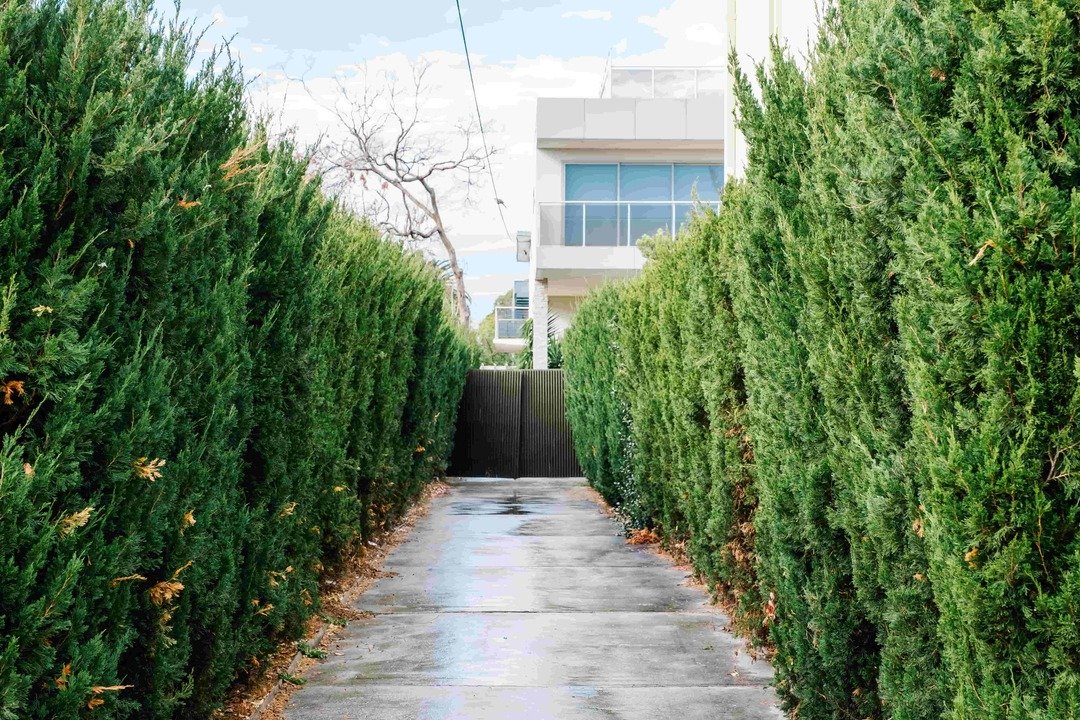
- Green Giant arborvitae trees add three feet of growth each year to create fast living walls
- Norway spruce trees block harsh northern winds and tolerate dense inland clay soil
- Cryptomeria trees resist local deer populations and maintain deep green color during winter
- Staggered planting lines provide natural coverage across open multi-acre property borders
- Proper root space prevents branch crowding and keeps lower foliage thick for decades
Multi-acre estates offer space, open views, and freedom. Large land parcels also present unique boundary challenges. Road sightlines stay wide, neighboring homes remain visible through winter months, and cold winds sweep across open lawns.
Natural screening walls solve these issues while preserving your outdoor aesthetic. Deciduous trees drop leaves each autumn, but evergreen varieties hold dense foliage through all four seasons. Careful species selection creates a living buffer that blocks noise, wind, and unwanted views.
Why Large Estates Require Evergreen Privacy Screens
Large yards require tall living structures to match the scale of your home. Standard fences look small on multi-acre grounds and cost a fortune to build across long property lines. Evergreens grow tall, fill wide gaps, and blend naturally into the surrounding forest.
| Screen Type | Winter Coverage | Height Potential | Natural Lifespan |
| Deciduous Trees | Low (Leaves drop in fall) | 40 to 80 Feet | 50+ Years |
| Wood Fences | High (Static coverage) | 6 to 8 Feet | 10 to 15 Years |
| Evergreen Trees | High (Dense year-round) | 30 to 70 Feet | 60+ Years |
Winter brings the greatest need for privacy screening. When oak and maple trees shed their leaves, open views clear straight to your house. Evergreens maintain full needle density year-round to keep your outdoor spaces private.
Tall tree lines act as natural windbreaks during harsh winter storms. Dense branches slow cold gusts before weather impacts your main home. This natural shelter reduces winter heat loss and protects sensitive landscape plants across your lawn.
Top Evergreen Varieties for North Greenwich Properties
Correct species selection secures total success across large acreage. Every tree choice brings unique growth habits and physical strengths.
Green Giant Arborvitae
Green Giant arborvitae works as a main fast-growing privacy tree for large boundaries. This reliable option gains three feet per year with proper sun access and good soil. Branches build a tight cone structure that blocks open views without extra side trim work.
- Height potential: Grows forty to sixty feet high at maturity.
- Sun needs: Demands six hours of full sun each day.
- Deer resistance: Resists deer damage far better than standard arborvitae options.
Norway Spruce
Norway spruce provides massive scale for long estate borders. Its dark green needles and drooping side branches block heavy wind and snow. This variety handles dense clay soil and rocky ground common in inland neighborhoods.
- Height potential: Reaches fifty to seventy feet tall with a wide base.
- Soil tolerance: Adapts well to acidic earth and heavy moisture.
- Wind protection: Functions as a heavy wind barrier along open fields.
Japanese Cedar (Cryptomeria)
Cryptomeria offers soft texture and unique blue-green color. Its feathery needles turn bronze in deep winter cold, then return to rich green each spring. Local deer rarely touch this species, which makes it ideal for properties near wooded preserves.
- Height potential: Reaches thirty to forty feet tall.
- Best placement: Fits well near outdoor living spaces and patios.
- Maintenance: Requires minimal pruning to hold its natural form.
To select the right species mix, consult the best evergreen privacy tree specialists.
Layout and Spacing Guidelines for Multi-Acre Lines
Proper layout decisions determine how fast your privacy screen closes gaps. Plant trees too close, and lower branches drop needles from lack of sun. Plant them too far apart, and full privacy takes extra years to form.
Staggered double rows create the most natural look on large properties. Place trees in two parallel lines with offset positions. This zigzag pattern allows each tree room to expand while it creates a solid visual block from the road.
Single-line hedges work well along straight property boundaries. Space large spruce trees fifteen feet apart from center to center. Space medium arborvitae varieties eight to ten feet apart to allow full branch growth.
Always check local utility lines and setback rules before work begins. Keep tall evergreen lines twenty feet away from main structures and power cables. Deep root systems need space to anchor trees against severe wind gusts.
Soil Care and Site Preparation
Inland soil differs from coastal sand. You will find dense clay, rich topsoil, and glacial rock deposits. Preparing your ground correctly ensures quick root establishment.
| Soil Condition | Primary Local Hazard | Corrective Action |
| Dense Clay | Water traps around roots | Mix organic compost into open holes |
| High Acidity | Stunted root growth | Spread agricultural lime over topsoil |
| Glacial Rocks | Blocked root expansion | Remove large boulders with machinery |
Complete a deep soil test along your property boundary line first. Clay soil retains moisture long after heavy rain, which rots fresh root bases if water stays trapped. Mix natural compost into your open holes to open up dense earth blocks.
Cover root zones with a two-inch layer of wood mulch. Keep all mulch three inches away from main trunks to stop bark rot and bug infestation. Proper mulch retains groundwater and manages soil temperature through seasonal shifts.
Water fresh evergreen roots two times each week during early growth. Use slow trickle hoses to soak soil six inches deep. Deep moisture forces roots down into stable ground layers.
Why Professional Design Ensures Estate Success
Large privacy projects involve heavy equipment, site prep, and large specimen trees. Manual installation of mature trees risks worker safety and root damage.
Professional crews assess soil depth, clear heavy underground boulders, and dig wide trenches safely. Experts secure proper permits for work near public roads and utility lines.
Professional tree planting services guarantee high tree survival rates. Professional teams use specialized machinery to set root balls level with surrounding lawn lines.
Integrated landscape privacy solutions raise property value while they protect your personal space. Expert placement balances tree height, branch width, and natural light across your entire yard.
Work with North Greeny Landscaping
At North Greeny Landscaping, our skilled crew handles full tree care and custom outdoor projects to protect your investment. We have proudly served our local community for over five years, completing more than five hundred tree tasks safely across local yards.
Our team manages full timber work, wood processing, tree installation, and custom milling. We combine trade knowledge with dedicated local service so your estate stays safe and beautiful.
Trust our team for reliable tree planting services in Greenwich. We plant the best evergreen privacy trees that local properties require. Contact North Greeny Landscaping today to schedule your on-site property evaluation.
Frequently Asked Questions
How long does an evergreen privacy screen take to form a solid wall?
Fast species like Green Giant arborvitae form a dense hedge within three to five years. Slower spruce varieties require five to seven years for full branch connection.
How do you protect young evergreen screens from deer damage?
Select deer-resistant varieties like Cryptomeria or Norway spruce. You can also apply organic repellent spray or install temporary fence barriers during initial winter seasons.
Can you mix different evergreen species in one privacy screen?
Yes, mixing species creates a natural woodland look and prevents full loss if disease hits one variety. Alternate spruce, cedar, and arborvitae along long property lines for visual texture.